Big Tech Backlash Emerges as Rare Bipartisan Common Ground
09/08/2026 / By Edison Reed
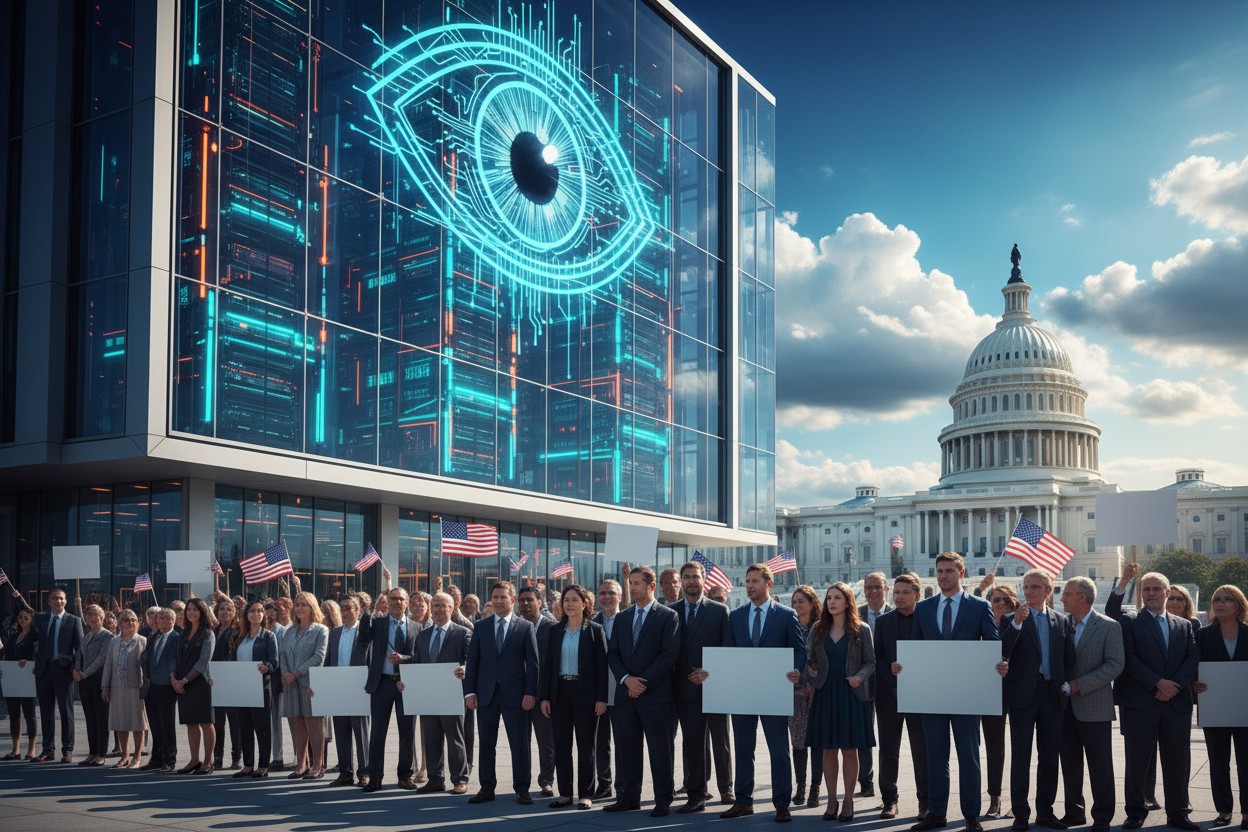
Public confidence in large technology firms has fallen to record lows, according to pollsters, as opposition to the industry’s footprint spreads across the political spectrum. The backlash has moved beyond party lines, drawing together governors, lawmakers and activists who have found common cause in resisting corporate overreach.
A Gallup poll cited in recent reporting shows confidence in Big Tech dropping from 32% in 2020 to 20% in 2026. Political analysts point to a shared distrust of centralized power as the driving force, uniting figures as diverse as Texas Gov. Greg Abbott and Pennsylvania Gov. Josh Shapiro behind scrutiny of data centers and surveillance technologies [1].
Bipartisan Pushback Against Big Tech
The erosion of trust has put technology firms in an unfamiliar position, as officials from both major parties take regulatory action against them. Texans for Public Justice reported that Republican Abbott and Democratic Shapiro each introduced measures this summer to tighten approval processes for new data centers and reduce the environmental and financial burdens they place on local communities [1] [7].
Governors from both parties, including Ron DeSantis of Florida, Spencer Cox of Utah, and Dan McKee of Rhode Island, have ordered restrictions or funding limits on surveillance technology [1] [7].
According to political scientists, the emerging consensus reflects a “Don’t tread on me” sentiment that resists corporate expansion into local affairs. The pattern appears in opinion surveys, with a July Gallup report showing Republican confidence in tech firms at 20% and Democratic confidence at 13%. The figures indicate that skepticism has grown across party lines rather than remaining confined to one ideological faction [2].
Data Center Projects Face Mounting Scrutiny
Data center construction has become a flashpoint for this bipartisan resistance, as communities confront the resource demands of artificial intelligence (AI) infrastructure. Just the News reported that the backlash began as zoning disputes in rural counties and has intensified into coordinated national action.
On July 18, organizers affiliated with Humans First, a nonprofit co-founded by Tea Party veteran Amy Kremer, staged 142 protests across 42 states against the AI data-center build-out [3]. The crowds included both conservative and liberal participants, according to reports [3].
In Kentucky, a farmland owner rejected a $26 million offer for a data center project, telling an AI firm representative to “kick rocks and don’t come back,” according to Just the News [1] [7].
Similar opposition has emerged at county meetings and town halls, where residents cite concerns about water consumption, electricity costs, and the loss of agricultural land [4]. One facility in Utah consumes an estimated 17 billion gallons of water per year for its gas turbines alone, according to reporting from Brighteon [5].
A separate analysis noted that a single large data center could increase that state’s CO2 output by as much as 75% [5].
Republican figures including Texas Attorney General Ken Paxton and former Rep. Mike Rogers have called for stricter guardrails on the industry, while members of Congress have proposed legislation to make tech companies share the cost of grid upgrades and ratepayer protection programs [1] [7].
Surveillance Cameras Draw Left-Right Opposition
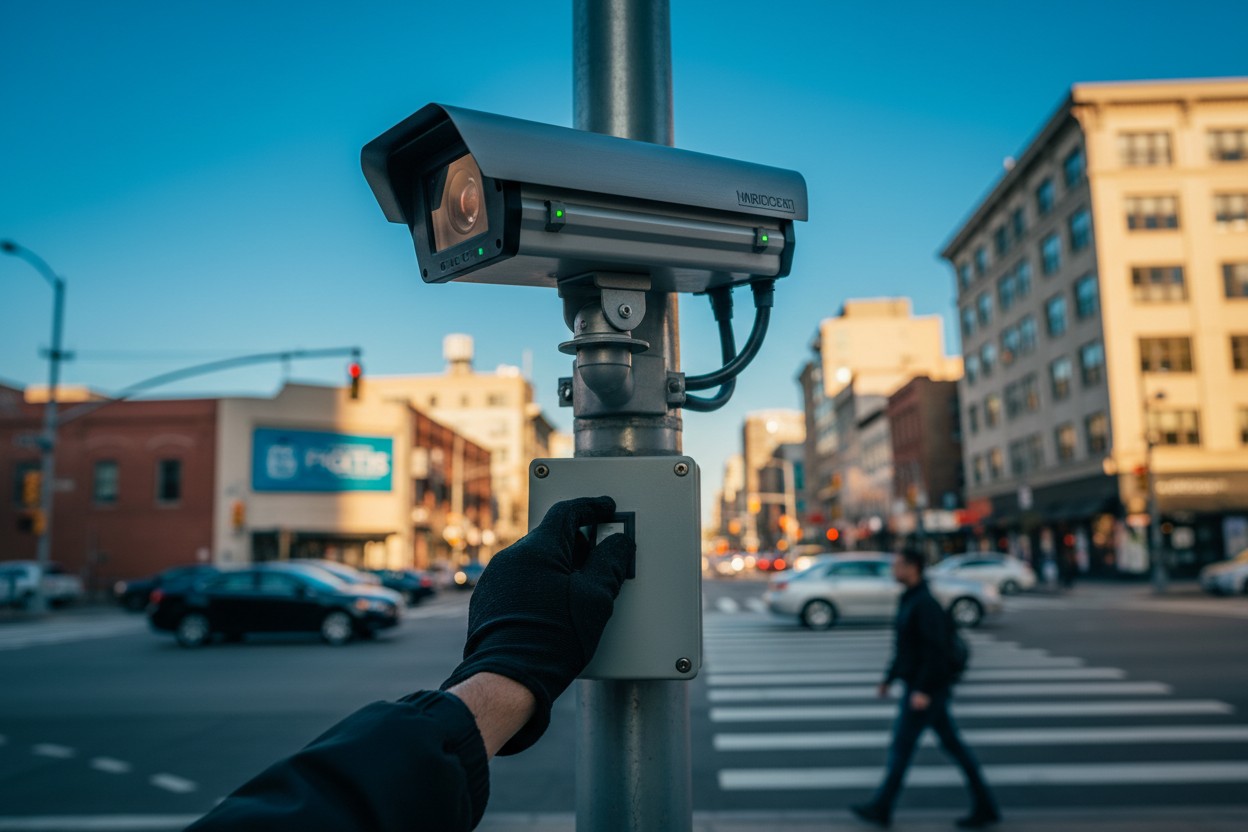
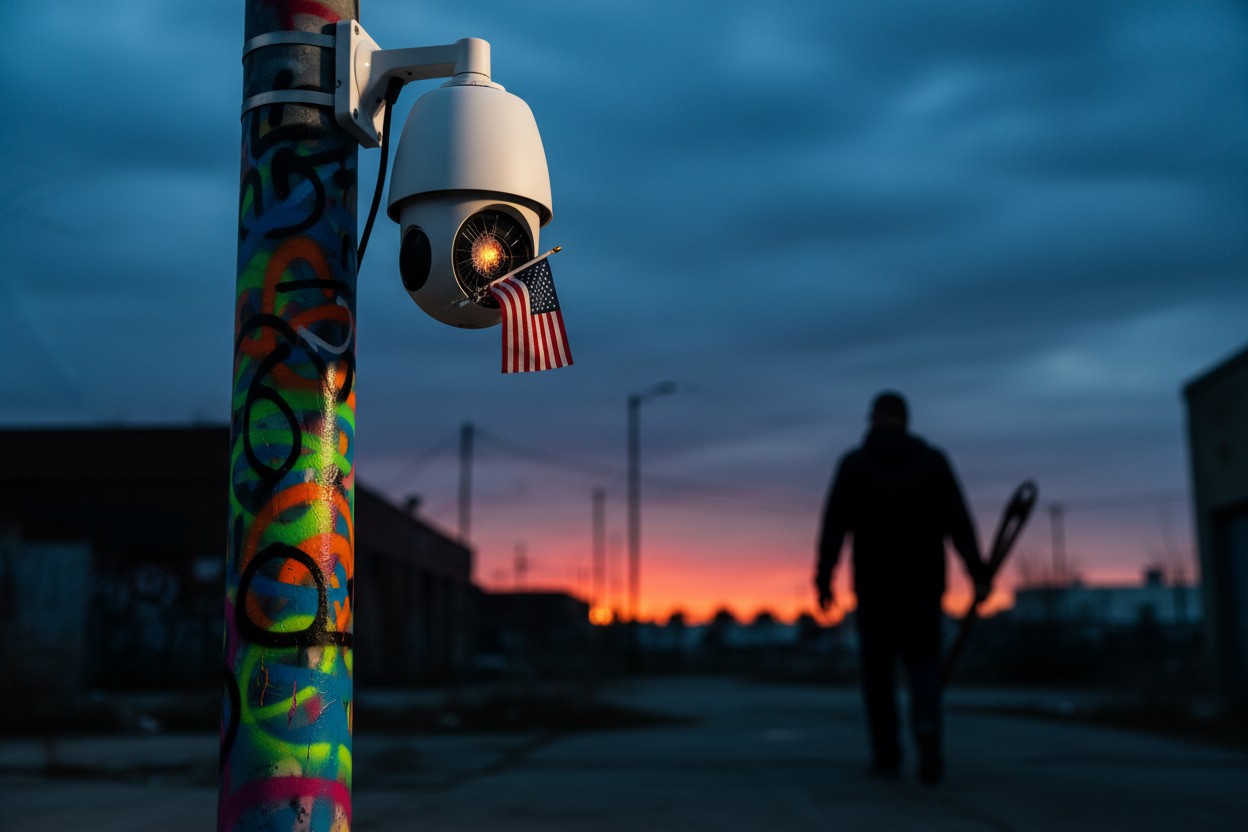
Renewed backlash this summer against Flock Safety’s automated license plate readers has exposed another front in the bipartisan pushback. Civil liberties groups, including the American Civil Liberties Union, have argued that the company’s privacy policy update failed to address mass-surveillance concerns, according to reporting from Just the News [1].
The company maintains that its data assists law enforcement in solving crimes, but critics contend the devices amount to an unchecked monitoring network.
The Fourth Amendment, critics argue, is being “liquidated by subscription,” as private surveillance companies build an American panopticon one municipal contract at a time [6].
Activist Post reported that a network of small cameras, solar panels, and utility boxes now photographs drivers in many communities with barely any public debate before installation [6].
Republican skepticism of the technology runs deep, as does unease among Democrats. Governors from both parties, including Abbott, Shapiro, McKee, DeSantis, and Cox, ordered restrictions or funding limits on the technology, according to Just the News [1].
Polls, Verdicts Reflect Eroding Trust
Gallup data described in recent reporting shows that support for tech firms has fallen across the political spectrum, with GOP confidence dropping to 20% and Democratic support falling to 13% in 2026 [2] [7]. The figures underscore a broader shift in public sentiment that has now registered in court rulings and legislative battles.
Two landmark court verdicts against Meta and a settlement that forced changes to its platform rules illustrate how legal challenges have emerged as a channel for the backlash.
Political strategist Basil Smikle linked the scrutiny to a “long existing, but still growing rejection of a large surveillance state,” according to Just the News [1]. The public’s demand for accountability, he said, cuts across partisan identities.
A Rare Point of Agreement Emerges
Valerie Hudson, a professor at Texas A&M University, described the bipartisan alignment on tech issues as “transformative repolarization,” according to recent interviews [1]. She noted that the public’s trust in tech companies is “too far gone” for the industry to self-regulate effectively [1].
While policymakers and activists differ on remedies, the resistance to Big Tech’s expanding footprint stands out as a notable commonality in a divided political landscape. Cities and towns continue to mobilize against data centers, and both parties show no signs of abandoning their scrutiny of the industry [3].
References
- Just the News. “Big tech, state lawmakers fight back against unexpected disinformation war on data centers”. July 30, 2026.
- Reclaim The Net. “The Age Verification Con”. March 27, 2026.
- ZeroHedge. “The Data-Center Revolt Goes National: Tea Party Veteran Leads 142 Rallies Across 42 States”. July 19, 2026.
- The New American. “Feds Targeting ‘Anti-Tech Extremism’ as AI Backlash Spreads”. June 2, 2026.
- Mike Adams. “Bright Videos News – CHEMICAL SENSITIVITIES WEAPONIZED FOOD transcript”. BrightVideos.com. May 12, 2026.
- Activist Post. “The Fourth Amendment Is Being Liquidated by Subscription”. July 29, 2026.
- TheHill.com. “Americans don’t agree on much. Backlash to Big Tech might be the outlier”. September 7, 2026.
Submit a correction >>
Tagged Under:
AI, AI impact, AI surveillance, artificial intelligence, big government, Big Tech, computing, cybersecurity, data centers, data privacy, democrats, Flock cameras, Flock Safety, future tech, government control, information technology, online safety, politics, privacy watch, republican, surveillance, White House
This article may contain statements that reflect the opinion of the author
RECENT NEWS & ARTICLES